 Holbox Whale Shark Swim
Home › Guides › Is Swimming with Whale Sharks in Holbox Safe?
Is Swimming with Whale Sharks in Holbox Safe?
Is Swimming With Whale Sharks In Holbox Safe? Yes, when you go with a licensed operator, because federal rules cap swimmers at two per shark, require a guide in the water with you, and whale sharks eat plankton, not people. Tours from Holbox cost from $179.52 per person and run inside a protected biosphere reserve.
Quick answer Short answer: yes, the swim is safe under Mexican rules
Yes. Whale sharks are filter feeders that eat plankton and cannot eat humans. Mexican regulations allow only 2 swimmers in the water per shark, always with a certified guide, and every swimmer wears a life jacket or a 4 mm wetsuit.
Key takeaways
- Compare every holbox whale shark tour on one page.
- See who each operator is on the Holbox Whale Shark Group Adventure page.
- Prefer your own boat? Read about private whale shark tours.
- Flying in first? Book a Cancun Airport to Holbox shuttle.
Can I swim with whale sharks in Holbox?
Yes, you can swim with whale sharks from Holbox between May 15 and September 17, the season the reserve management programme sets.
Holbox sits beside the Reserva de la Biosfera Tiburón Ballena, a protected area of about 146,000 hectares off northern Quintana Roo where the sharks feed. Swimming is legal and regulated here. The rulebook is federal: the Mexican official standard NOM-171-SEMARNAT-2018 and the reserve management programme govern every boat that takes you out.
What the law actually allows
NOM-171 defines the activity as surface snorkelling only. No scuba gear, no diving down. You float at the surface while the shark swims beneath or beside you.
Only licensed boats with authorised guides may enter the reserve. The permit system is run by CONANP, and SEMARNAT publishes the exact season dates for each zone before it opens.
The upshot for you is simple. Book with a licensed operator and you are doing an activity the Mexican state has written detailed safety rules for.
Sources: DOF Mexico, DOF Mexico.
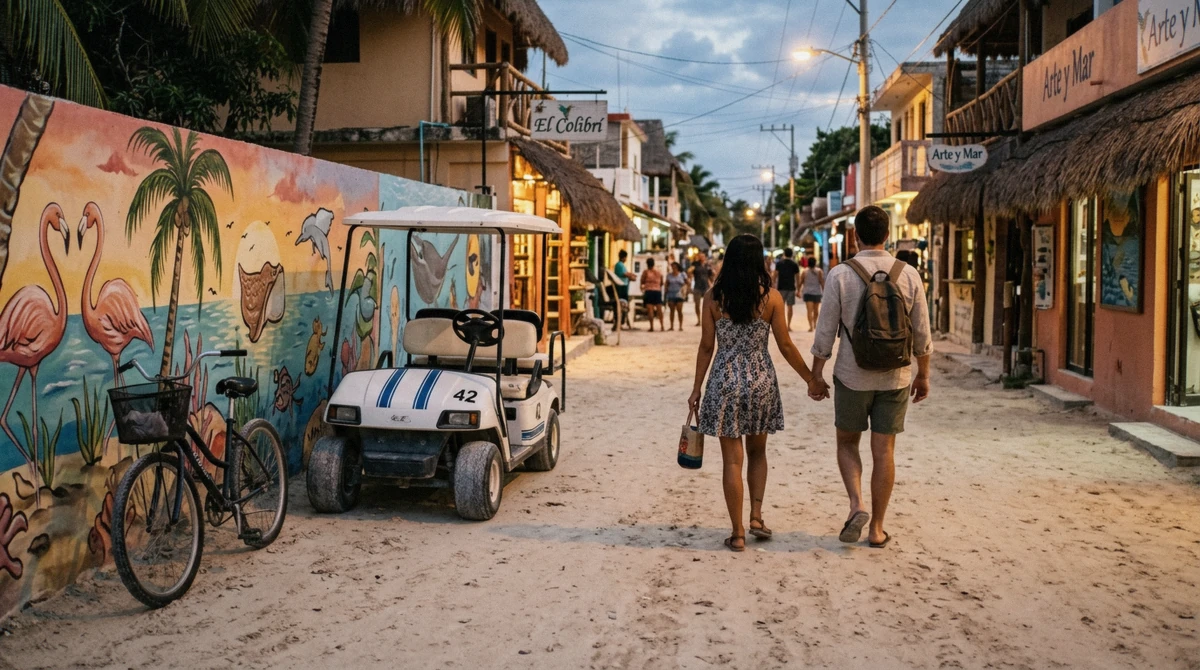
Holbox town after dark
Can a whale shark hurt you?
No, a whale shark cannot hurt a swimmer, because the largest fish in the sea is a filter feeder that eats plankton and has no interest in people.
This is the first fear to put to rest. Whale sharks strain tiny organisms from the water. They have no teeth worth the name for a swimmer and no predatory behaviour at all. Adults grow up to around 13 metres, and the species is listed as Endangered on the IUCN Red List, which tells you who should be worried about whom.
The one real risk in the water
The only genuinely recorded danger is a human one: swimming underneath a whale shark. After feeding, the animals sometimes descend without warning, and a swimmer directly below a descending shark of several tonnes can be injured. Your guide keeps you to the side of the animal, never behind or beneath it.
The rules back this up. Mexican law requires swimmers to stay at least 2 metres from the sides of the head and 3 metres from the tail fin. No touching, no grabbing, no riding. Follow the guide and the risk disappears.
Risk versus safeguard
Every real risk of the day has a rule or a practice that manages it.
| Risk | Safeguard in the rules |
|---|---|
| Shark descends on a swimmer | Guide swims with you, swimmers stay 2 m from the head and 3 m from the tail, never under the animal |
| Being struck by the tail | 3 m minimum from the tail fin, boats drop swimmers 15 m ahead of the shark's path |
| Boat traffic | Boats keep 5 m from sharks and 50 m from each other, max 3 knots near animals, boats take turns |
| Open water swimming | Life jacket or 4 mm wetsuit required for every swimmer, guide and group leader |
| Sunburn and heat | Biodegradable sunscreen only, day runs in daylight hours 07:00 to 14:00 |
| Rough seas | Activity is suspended when wind passes 25 km/h |
Sources: DOF Mexico, DOF Mexico.
What are the rules in the water?
Only 2 visitors may be in the water with a shark at one time, each gets a maximum of 2 swims, and a certified guide is in the water with your group.
The safety of the swim comes from limits, and the limits here are strict and enforced. They exist to protect both you and an Endangered species.
The limits, in one table
These are the numbers your captain and guide must work within.
| Rule | Limit |
|---|---|
| Swimmers per shark at once | 2 visitors |
| Swims per person | 2 dives each |
| Guide to swimmer ratio | Max 5 users per certified guide |
| Distance from the shark | 2 m from head sides, 3 m from tail fin |
| Time one boat may stay | 30 minutes with a shark or group |
| Swimming style | Surface snorkelling only, no diving down |
| Gear required | Mask, fins, snorkel, life jacket or 4 mm wetsuit |
| Sunscreen | Biodegradable only |
| Photography | No selfie sticks, no flash or artificial light |
| Operating hours | 07:00 to 14:00, daylight only |
How boats take turns
When a shark is found, the first boat holds position a boat length away and other boats wait 30 minutes at 50 metres or queue to take turns. Boats move at 7 knots or less near sharks, 3 knots in the aggregation zones. You will rarely have more than one other boat in your line of sight in the water at a time, which is one reason the swim feels calmer than most people expect.
Sources: DOF Mexico, DOF Mexico.
How does the tour day work from Holbox?
Tours leave the dock around 8am, ride about 2 hours out to the feeding grounds, and typically give you 3 short swims before snorkelling a reef and visiting a flamingo sanctuary.
Knowing the shape of the day removes most of the anxiety. It is a long boat trip in open water, not a beach swim, so it pays to picture it.
Morning to afternoon
You board in Holbox in the morning. The run out to the reserve takes around 2 hours. The captain looks for the dark shadows and feeding birds that mark an aggregation, then motors gently alongside once one is found.
Your boat takes its turn. Two swimmers at a time go in with the guide, most guests get 3 short swims across the morning. After the shark swims you usually stop at a reef with sea turtles and manta rays, and many boats finish at a flamingo sanctuary before the ride home.
All activity happens between 07:00 and 14:00 by law, so you are back in Holbox in the early afternoon.
Do you need to be a strong swimmer?
You need to swim, and you need to swim with effort. Whale sharks feed on the move, and you have to keep pace with fins to stay beside one for the length of your encounter. A life jacket or wetsuit is mandatory, which does most of the floatation work for you.
If you cannot swim at all, you can still come on the boat and watch from the deck, and many boats spot dolphins, turtles and manta rays along the way. Kids do this tour. One Holbox operator with thousands of guests describes it as safe for the entire family.
What about seasickness?
The 2 hour crossing is in open water and the swell can be real. If you are prone to seasickness, take your remedy before boarding, eat lightly, and stay on deck where the horizon is visible. Skip the tour entirely on a day you already feel ill.
Operators suspend the activity in wind above 25 km/h, so a genuinely dangerous day does not go out at all.
Source: DOF Mexico.
Tours That Fit
Licensed small boat trips from Holbox that follow the official rules.
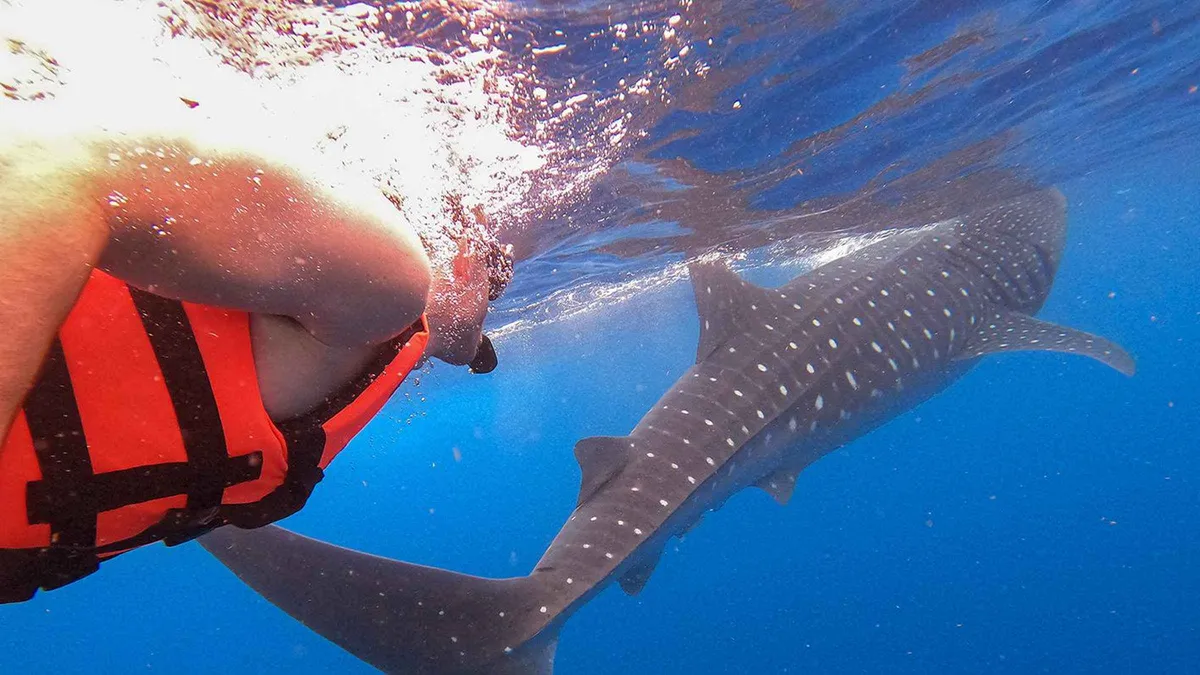
Search and Swim with Whale Sharks (All Inclusive)
All inclusive small group whale shark swim from Holbox with breakfast, ceviche lunch, Cabo Catoche snorkeling and a 4.9 rating from 267 reviews.
- Cancellation
- Free cancellation 24h
- Operator
- VIP Holbox Experience
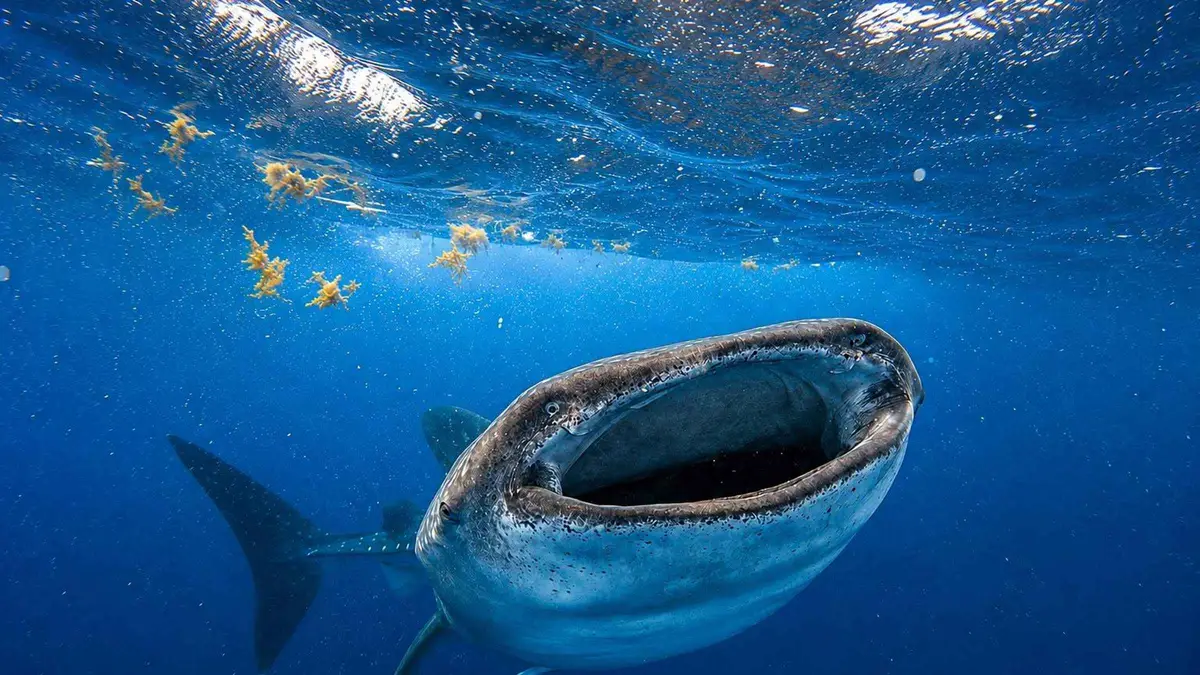
Whale Shark Swim & Snorkeling Eco Tour with Lunch
The only Holbox option listing the CONANP marine park bracelet fee as included, with a Santa Paula River flamingo stop on the way back.
- Cancellation
- Free cancellation 24h
- Operator
- Xtreme Holbox
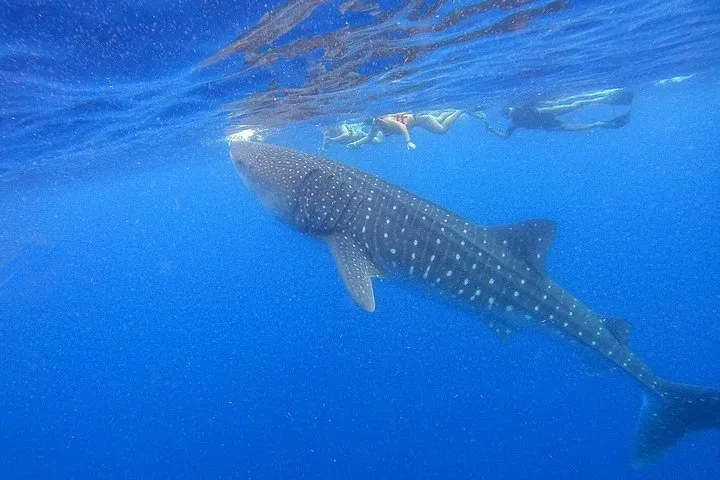
Whale Shark Group Adventure from Isla Holbox
A seven-hour small-group boat trip from Holbox with breakfast, ceviche, snorkel gear and government fees included for $179.52.
- Cancellation
- Free cancellation 24h
- Operator
- Holbox Whale Shark Tours
How do I choose a safe operator?
Choose an operator with a current CONANP permit, a certified guide in the water, and the right gear on board, and treat a 20 year safety record with thousands of guests as a good sign.
The rules are only as good as the boat that follows them. Every licensed captain works to the same law, so your job is to confirm the licence, not to compare daredevil exploits.
What to ask before you pay
Ask three things. Is the boat authorised for the whale shark reserve this season. Is a certified guide going in the water with us. Are life jackets or 4 mm wetsuits provided for every swimmer.
A lawful answer to all three means you are booking the same regulated experience as everyone else on the water. The permits limit the whole reserve to 160 boats per day and 1,350 visitors per day, so supply is controlled and unlicensed operators are the exception, not the rule.
Group size and boat choice
Group boats carry around 8 to 10 guests plus crew, which matches the average of 8.4 visitors per boat cited with the management plan. Fewer people means a shorter wait for your turn in the water. If waiting matters to you, look at private whale shark tours, where your group sets the pace.
Source: DOF Mexico.
When is whale shark season in Holbox?
The season runs May 15 to September 17, with July and August the peak months when a local provider reports more than 150 sharks a day in the viewing area.
Go at the right time and both your safety margin and your sighting odds improve. Calm, crowded-with-sharks days are the easy days.
Picking your month
The reserve opens May 15 and closes September 17. Early season, mid-May and June, has fewer boats and sharks arriving in growing numbers. July and August are the prime window, when operators at the 2026 peak reported up to 50 or more sightings a day from Holbox boats.
In the shoulder weeks at either end of the season, some days produce only one whale shark or none at all. That is not a safety problem, but it is a disappointment problem, so aim for the middle if you can.
Weather in season
Season months run hot, with average highs of 33 to 34 °C from May through September. September is the wettest month of the year at 199 mm, and the Atlantic hurricane season runs June 1 to November 30 with a peak around September 10. The swim happens in daylight between 07:00 and 14:00, and the activity is suspended in wind above 25 km/h, so a washed out day is a rare but real possibility.
Sources: DOF Mexico, National Hurricane Center.
How much does a safe tour cost?
Shared tours from Holbox cost between $179.52 and $210 per person, and private boats run $1,218.54 per group or $1,490 for up to 8.
Price tracks safety indirectly. A properly permitted boat with a guide, wetsuits and a small group cannot be the cheapest ticket on the island.
What tours from Holbox cost
Compare the current options side by side, all of them day trips from Holbox with the guide and gear the law requires.
| Tour | Price | Duration | Rating |
|---|---|---|---|
| Whale Shark Group Adventure from Isla Holbox | $179.52 per person | 7 hours | 4.3 (86 reviews) |
| Whale Shark Swim & Snorkeling Eco Tour with Lunch | $186 per person | 7 hours | 4.6 (57 reviews) |
| Search and Swim with Whale Sharks (All Inclusive) | $205 per person | 7 hours | 4.9 (267 reviews) |
| Whale Shark Tour from Holbox Island | $210 per person | 6 hours | 4.5 (47 reviews) |
| Swim with Whale Sharks on a Private Tour | $1,218.54 per group | 7 hours | 4.5 (27 reviews) |
| Holbox Private Whale Shark Search Swim & Snorkeling Tour | $1,490 per group up to 8 | 7 hours | 5.0 (1 review) |
Getting to Holbox the day before
Most guests sleep in Holbox the night before, because boats leave around 8am. The island is about 90 miles, roughly 2 hours drive, from Cancun. If you land on the day, a Cancun Airport to Holbox shuttle plus the ferry from Chiquilá is the route, and the ferry crossing takes about 25 minutes.
Alternatively a whale shark tour from Cancun picks you up on the mainland and skips the overnight stay.
What are the downsides of a whale shark tour from Holbox?
The honest downsides are a long open water crossing, no guarantee of sharks on any single day, and the strict limits on your time in the water, none of which are safety failures.
Forum threads titled Think Twice get one thing right: this tour is not for everyone. Here is what to weigh up honestly before you book.
The three real complaints
First, the boat ride. Around 2 hours each way on open water is a long time if the swell is up or you get seasick.
Second, no guarantee. Early or late in the season, some days find only one whale shark or none. The federal rules set no minimum number of sharks for a tour to run, so a boat can go out and come back without a sighting.
Third, brevity. You get 2 swims by law, typically 3 short encounters, and one boat may stay with a shark only 30 minutes. If you imagined an hour floating alone with a shark, adjust the picture.
None of these is a danger. They are the cost of a tightly regulated, sustainable encounter, and they are why reading the tour pages before booking pays off. Start with the holbox whale shark tour overview.
Source: DOF Mexico.
Is swimming with whale sharks ethical?
Yes, most observers consider it net positive, because permit fees fund conservation in the reserve and the rules forbid touching, feeding and scuba with the sharks.
The encounter is built to leave the animals alone. They are wild, unfed and untagged, and the industry around them pays for their protection.
Why it works
The reserve was created by presidential decree in 2009 and covers about 146,000 hectares from Isla Contoy to Ascension Bay. Permit fees from tours feed conservation work in the area, which is one travel writer's reason for calling the tours net positive, while warning that unchecked growth would erode that benefit.
The rules themselves are the ethics in practice. Surface snorkelling only, no touching, no flash photography, a 30 minute cap per boat, biodegradable sunscreen only. The species is Endangered and listed as threatened in Mexican law, and the swim gives it an economic value alive that it never had hunted.
Your part is small. Use biodegradable sunscreen, keep the distances, and book a licensed boat.
Sources: DOF Mexico, DOF Mexico.
Is it safe to go to Holbox Mexico right now?
Holbox is a small car-free island with 43 registered hotels and about 1,100 rooms, and the day's main risks are sun, waves and the ferry schedule rather than anything else.
The swim is only half the trip. Here is the practical safety picture on the island itself.
On the island
Holbox has no recorded shark attacks on swimmers at its beaches. The waters you will walk into are shallow and calm on the north shore. The island is also notably free of sargassum seaweed, which hoteliers credit to the Cabo Catoche barrier.
That makes beach days before or after your tour straightforward. Watch for two ordinary things. The sun in May through September is fierce at highs of 34 °C, so hydrate and cover up.
Foreign visitors to Quintana Roo also pay the Visitax, online at visitax.gob.mx.
Are there crocodiles in Holbox?
Crocodiles are not a risk you will meet on a whale shark tour. The boats operate offshore in the reserve, roughly 146,000 hectares of open ocean between Isla Contoy and Ascension Bay, which is no crocodile habitat. The island's lagoons and mangroves are a different environment, so keep to marked paths there, but nothing in the official tour rules or the reserve documents treats crocodiles as a hazard for swimmers at the shark grounds.
Source: VisiTax Quintana Roo.
Where is the best place to swim with whale sharks in Mexico?
The waters off Holbox and the north of Quintana Roo hold the largest documented whale shark aggregation in the area, inside Mexico's only whale shark biosphere reserve.
Mexico has several whale shark destinations, but the reserve off Holbox was created specifically for this animal.
Why Holbox and the north of Quintana Roo
The Reserva de la Biosfera Tiburón Ballena was established by presidential decree in 2009 to protect the feeding aggregation off northern Quintana Roo. Its main use zone alone covers 140,615 hectares of open water. A local provider quoted in the press reports more than 150 sharks a day in the viewing area at the July and August peak.
What makes it the best place is the combination of density and regulation. Nowhere else in Mexico do you get a decree-protected aggregation, a 2-swimmer rule, and boats capped at 160 per day, all within a short boat ride of an island you can sleep on.
Source: DOF Mexico.
Frequently Asked Questions
Can I swim with whale sharks in Holbox?
Yes, from May 15 to September 17, on licensed boats that follow the reserve rules. Compare dates and boats on the holbox whale shark tour overview.
Do I need to be able to swim?
You need basic swimming plus effort with fins, since the sharks keep moving. A life jacket or 4 mm wetsuit is mandatory for every swimmer and the guide swims with you.
How many people swim with one shark at a time?
Two visitors per shark, each for a maximum of 2 swims, with a certified guide supervising at most 5 users.
What happens if no sharks are found?
The rules set no minimum number of sharks, and early or late in the season some days find one or none. Read each operator's terms on the tour pages before booking.
Is there a park fee on top of the tour price?
It depends on the tour. The VIP Holbox Whale Shark Swim lists the activity bracelet in its price and the Holbox Whale Shark Group Adventure lists government fees as included, while Ocean Tours from Cancun collects $25 in cash at pickup. Check the card before you book.
Are there crocodiles in Holbox?
Not where you swim with the sharks, since the tour happens in open ocean offshore. Keep to marked paths around the island's lagoons and mangroves.
Is it safe to go to Holbox Mexico right now?
Yes, the island has 43 registered hotels, is free of sargassum, and its beaches have no recorded shark attacks on swimmers.
Can I do the tour without staying on Holbox?
Yes, a whale shark tour from Cancun runs from the mainland, though tours from Holbox leave the dock earlier and reach the grounds faster.
More Guides
- Private Whale Shark Tours
Your party alone on the boat in 2027: two private Holbox options from $1,218.54 per group, about 7 hours with a guide in the water. Compare tours.
- Cancun Whale Shark Tours
Cancun whale shark tour prices for 2027: from $199 per person, 6 to 10 hours, with hotel pickup, breakfast and gear. Compare tours.
- When Is the Best Time to Swim with Whale Sharks in Holbox?
Holbox whale shark season runs 15 May to 17 Sep. July and August bring the most sightings. Tours from $179.52. Compare months in 2027.